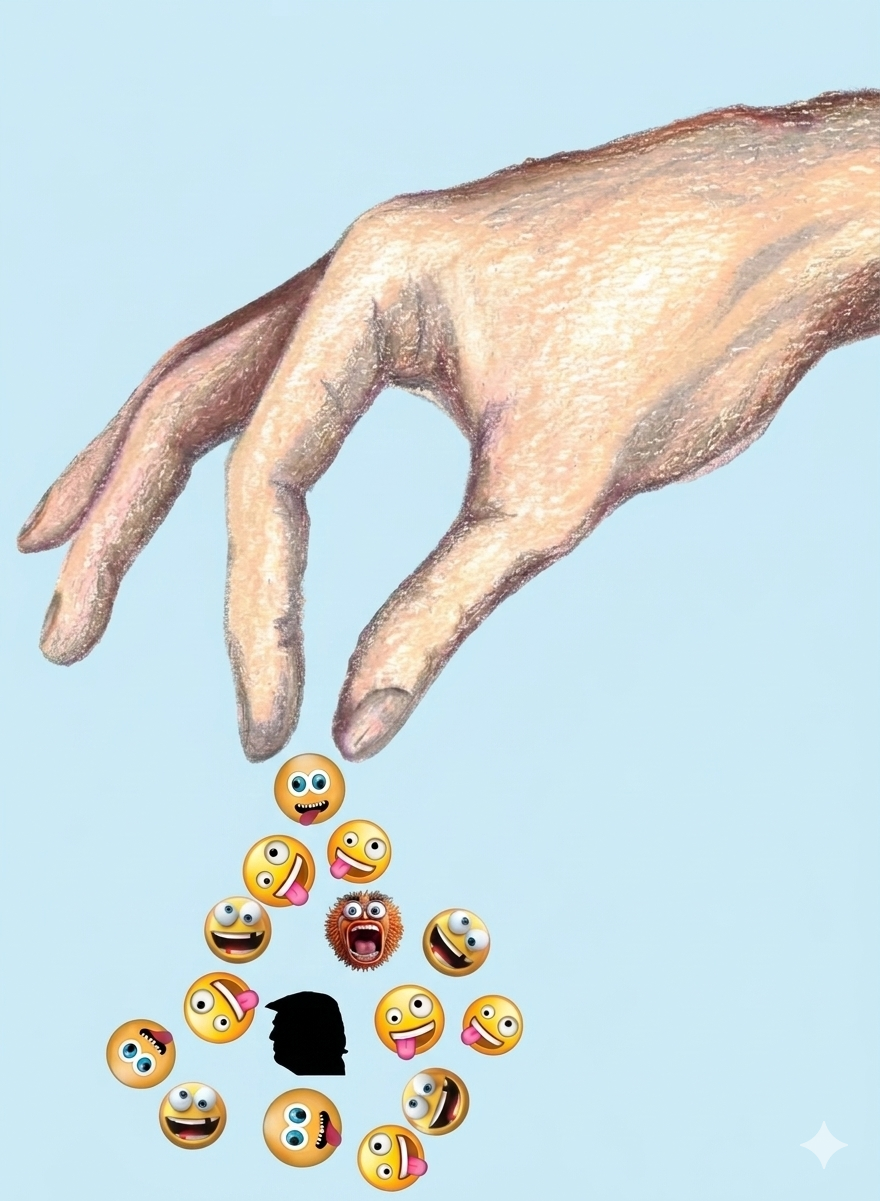
Welcome, everyone. This month, we’ll set aside current events to focus instead on the relationship between the two types of idiotin and one of the main symbols associated with human madness.
In previous articles, we presented the conformational structures of Type 1 and Type 2 idiotins. Some perceptive readers may have noticed a clear similarity between the structures of these two idiotins, even though their respective amino acid sequences are completely different. Since a picture is worth a thousand words, the figure below illustrates this point most strikingly:
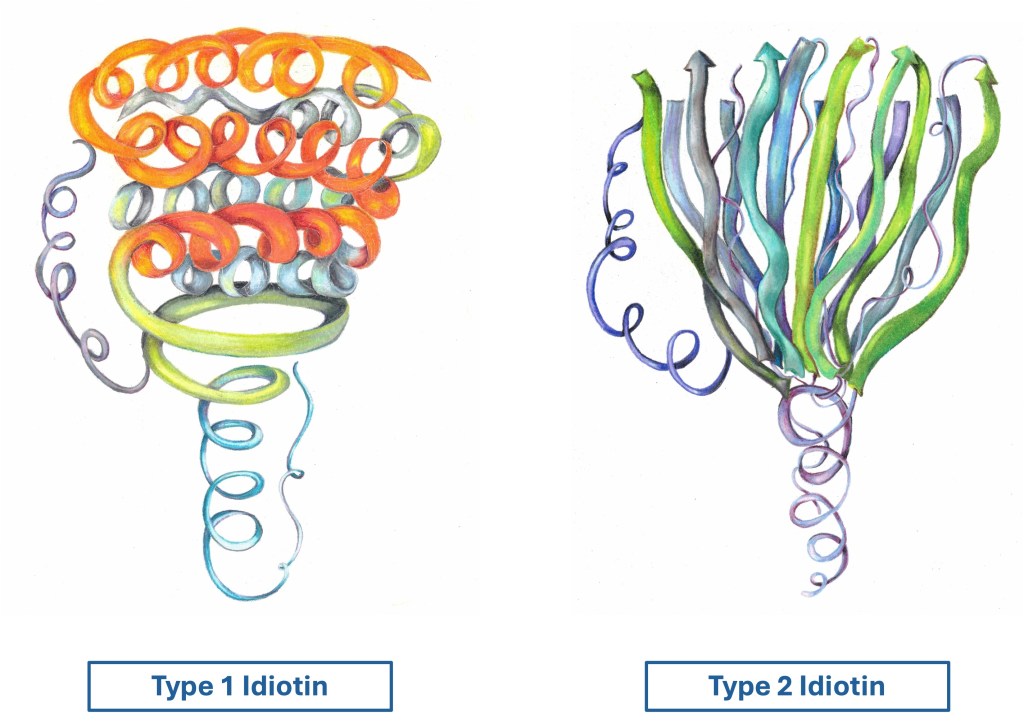
Figure 1 – Artist’s rendering of the structure of Type 1 and Type 2 Idiotins (Hélène Caza, 2026)
It must be admitted that these two proteins show a definite similarity in their conformation—a similarity which, incidentally, is likely related to their idiotinogenic properties.
The conformational analogy goes beyond this simple kinship. What’s truly mind-boggling is what happens when you place the two types of idiotin on either side of a funnel. See for yourself:
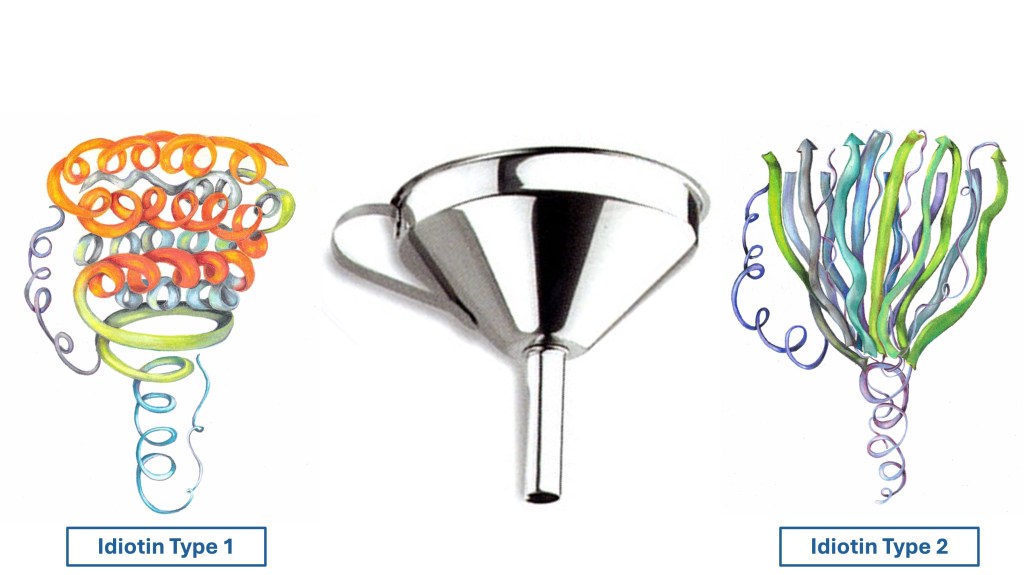
Figure 2 – A typical funnel flanked by Type 1 and Type 2 Idiotins.
In and of itself, this observation would be nothing more than an anecdote were it not for the fact that, since the Middle Ages, the funnel has been an object associated with madness. I’ll leave it to the skeptics to see this as nothing more than a mere coincidence. Others may see it as divine intervention, although, so far, a search for any reference whatsoever to a connection between the funnel and madness in the Old or New Testament —or even in other sacred texts—has proved completely fruitless. For my part, I see it rather as a magnificent insight on the part of Renaissance scholars and artists, who suspected that the insanity and madness surrounding them were due to a physiological phenomenon inspired by the properties of the funnel.
Indeed, the earliest depictions of this association between the funnel and madness date back to the Renaissance, as evidenced by several paintings by Hieronymus Bosch, that colorful 15th-century Dutch painter. We are delighted to present as an example ‘The Extraction of the Stone of Madness’, one of his most famous works.

Figure 3 – Hieronymus Bosch, 1494. The Extraction of the Stone of Madness (detail).
In this painting, we see a doctor wearing the aforementioned funnel attempting to extract the “stone of madness” from his patient’s skull (though the patient does seem a bit weary—most likely as a result of the nine-hour wait he had to endure in the emergency room). I sought to learn more about this curious allegory of the funnel as a symbol of madness. My brief research revealed that, originally, the funnel symbolized the transmission of knowledge—at least when the tip is pointing downward. In contrast, wearing the funnel as a headdress with the tip pointing upward suggests the flight of ideas toward the heavens, which can be metaphorically associated with madness.
It’s amusing to note that in Bosch’s painting, it is the doctor who is wearing the funnel, not the patient. I tried to dig a little deeper to find an explanation but didn’t find anything conclusive. I’ll venture to present a few hypotheses of my own, nonetheless:
- First of all, we cannot rule out the possibility that the doctor himself was a bit unhinged, judging by his surgical approaches, which were unorthodox to say the least.
- Bosch, who was said to be very vindictive, may also have had a grudge against his own family doctor, following a terrible bout of diarrhea caused by a concoction the doctor had prepared for him to cure a gout attack.
- Our friend Hieronymus may also have had a few drinks while painting his canvas, judging by the book he placed on the head of the nun casually leaning on the small table next to the patient. What is that nun doing there, and why does she have a book on her head? We’ll never know.
- Finally, it’s also possible that Bosch got his wires crossed in his understanding of the symbolism associating the funnel with madness, especially since digital research tools were rather limited during the Renaissance.
In any case, we can only once again bow in awe at this further demonstration of nature’s magnificent adaptability— a nature that fills us with wonder because of how perfectly it is crafted.
Furthermore, this notion of ideas escaping into the sky later inspired Pho Neul (1704–1777), an Irish physician whose mother was of Vietnamese descent. Dr Neul used this concept to develop a new therapy for treating people suffering from madness. Since the best ideas are always the simplest, Dr. Neul reasoned: since common sense escapes through the opening of a funnel, all one has to do is plug it to prevent the phenomenon. So he began treating his patients suffering from madness, dementia, and other forms of debilitating illnesses by having them wear a funnel on their heads at all times—a funnel to which he had attached a watertight stopper at the tip, the idea being, of course, to prevent this supposed leakage of ideas. At the cost of a thousand indignities, I managed to get my hands on the technical drawing of his invention:
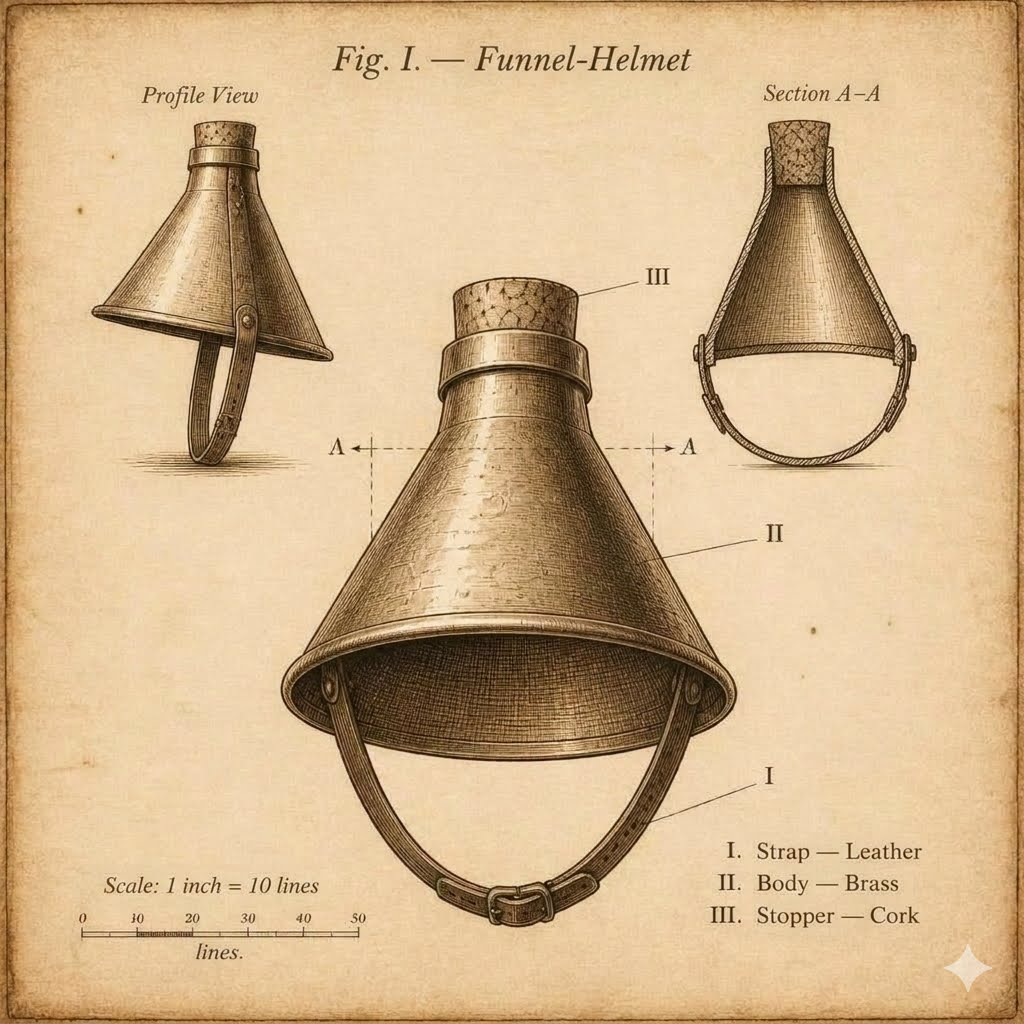
Figure 4 – Technical diagram of Dr. Neul’s Funnel Helmet (1742).
Dr. Neul had several copies of this device made and used them to treat his patients. The results of his experiments are described in his famous treatise published in 1744, titled Insania curanda infundibulo obstructo.
Unfortunately, no significant benefits were reported among the cohort of 42 patients who underwent this treatment for at least two months, as shown in the illustration below.
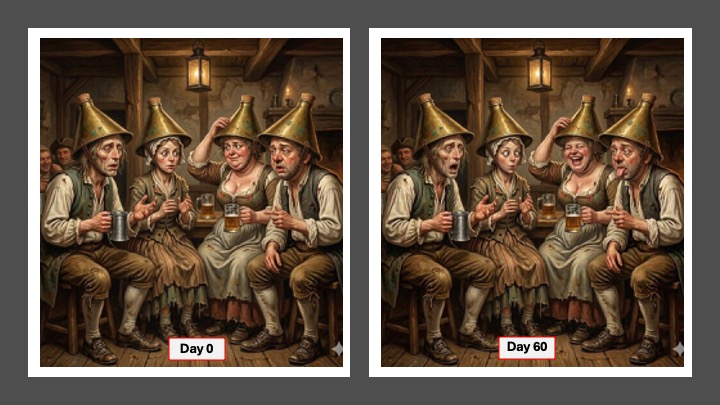
Figure 5 – Hans Hannity—Diptych of Four Patients Treated with Dr. Neul’s Funnel Helmet (1743)
This diptych, painted by the famous artist Hans Hannity (1698–1752), shows side-by-side portraits of four of these patients taken at the beginning and end of their two-month treatment.
Dr. Neul did subsequently attempt to modify his protocol. He thus exposed his patients, fitted with a funnel, to two hours of sunlight per day in order to stimulate their brains.

Figure 6. Dr. Neul’s Modified Helmet-Funnel Protocol —2 hours of sun exposure per day for 30 days.
As can be seen, this variation yielded no positive results; in fact, it made matters worse, judging by the expressions on the faces of the four individuals, as the scalps of some subjects reacted poorly to the scorching metal of the funnel. Somewhat discouraged by these results, Dr. Neul subsequently abandoned his research to devote himself to growing daffodils, his second passion, which nipped this—to say the least—original therapeutic approach in the bud.
Yet the original idea of placing a stopper on the funnel was perhaps not so foolish after all. I would therefore like to propose a variation: why not place the funnel over the patient’s mouth rather than on their head? Of course, we won’t be able to cure the patient, but even if we can’t stop ideas from escaping, perhaps we’ll at least succeed in preventing the spread of the idiocy, nonsense, and other rubbish that flows from the brains of these individuals. See for yourself.

Figure 6. The Neul Method for Treating Idiotinemia (Option 1 vs. Option 2) – Undeniable evidence of the superior efficacy of Option 2.
I’ve already shown you Dr. Neul’s technical drawing; there’s no doubt that with a simple 3D printer, many of you would be able to make a few prototypes of this funnel helmet and try it out with a few select people you know. I look forward to hearing about your results.


Votre commentaire